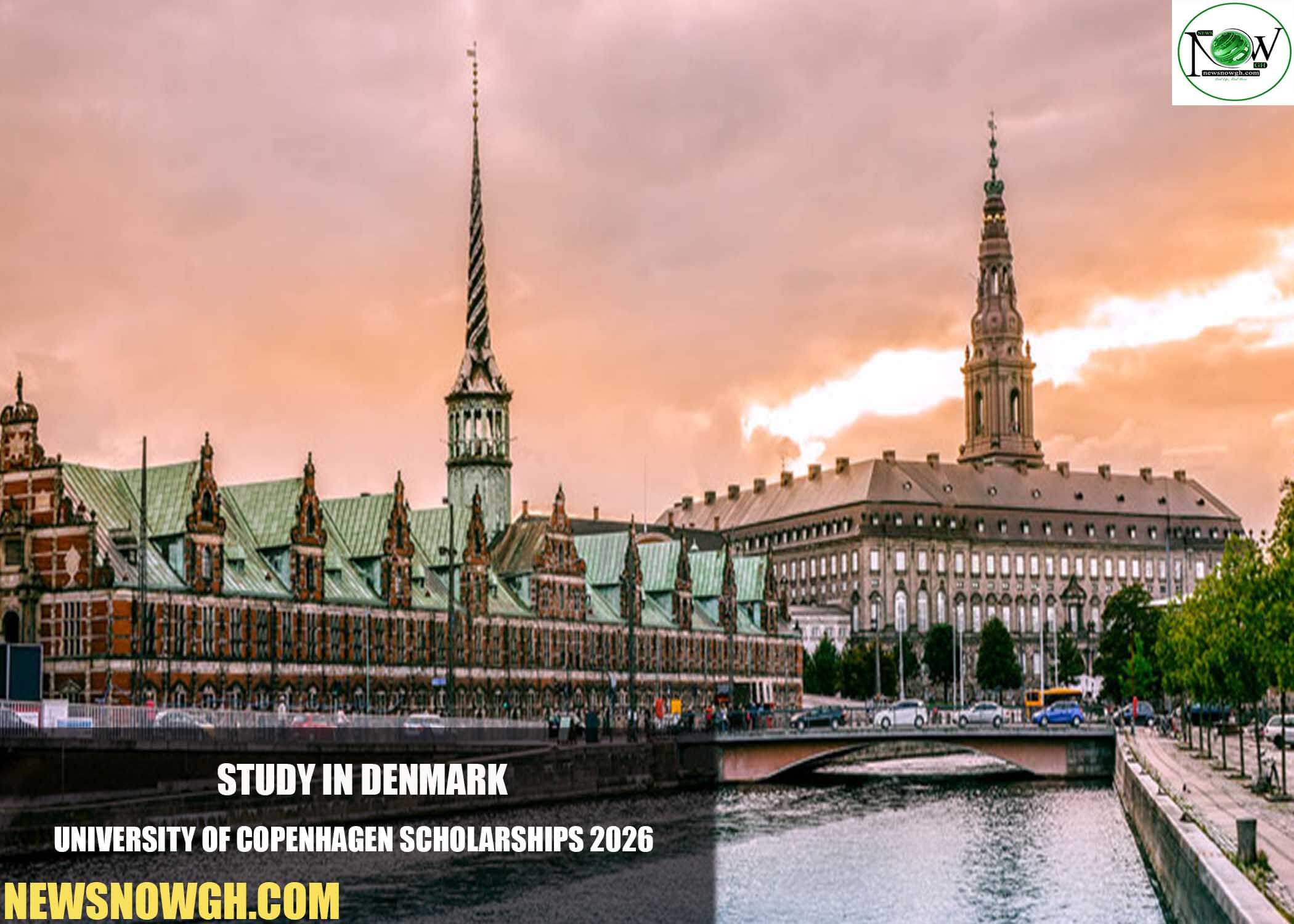
Study in Denmark | University of Copenhagen Scholarships 2026
Choosing to study in Denmark is quickly becoming one of the most strategic decisions an international student can make. The country offers a world-class education, a vibrant culture, and a direct path to incredible career opportunities across Europe. At the heart of this academic excellence sits the University of Copenhagen, a prestigious research powerhouse that consistently ranks among the best on the continent.
However, before you envision yourself biking through the charming streets of Copenhagen, you need a solid financial plan. Fortunately, funding your master’s degree in 2026 is more achievable than ever. A range of options exists, from generous Danish government scholarships to prestigious global awards. We’ve broken down the top funding routes so you can find the perfect fit for your situation.
Also, here are the five major scholarship opportunities for international students targeting the University of Copenhagen in 2026.
1. The Danish Government Scholarship: Your Primary Funding Route
If you are a citizen from outside the EU/EEA/Switzerland, this should be your first stop. The University of Copenhagen administers these scholarships directly, and they are highly competitive.
- What it covers: You can receive a full or partial tuition fee waiver. In many cases, the award also includes a monthly grant to help cover your basic living expenses in one of the world’s most livable cities.
- How to apply: Here is the best part: you do not need to submit a separate application. The university automatically considers all successful non-EU/EEA applicants for this scholarship. They base their decision purely on your academic excellence and the overall strength of your application.
- Who qualifies: You must gain admission to a master’s programme and hold a valid Danish study residence permit. Remember, it is not available to students who already have residency rights in Denmark.
2. The Fulbright Scholarship: For U.S. Citizens
American students have a fantastic, dedicated pathway to studying in Denmark through the Fulbright program.
- What it covers: This award provides significant tuition support for your master’s degree. It also includes a monthly stipend and travel funding, though the exact amounts vary by award type.
- The added value: Beyond the financial aid, you gain access to a powerful global alumni network and a host of cultural enrichment opportunities. It is an investment in your future leadership potential.
- How to apply: You must apply directly through the Fulbright Commission in the U.S. alongside your application to the University of Copenhagen.
3. External Scholarships: Expanding Your Search
The University of Copenhagen also recognizes a wide array of external funding bodies. If you do not secure the Danish Government Scholarship, do not lose hope. Moreover, many students fund their degrees through these prestigious organizations.
- Major options to explore:
- The Aga Khan Foundation Scholarship: Ideal for students from specific developing countries.
- Women Techmakers Scholars Program: Formerly the Google Anita Borg Memorial Scholarship, this supports women in technology.
- Rotary Foundation Global Grants: Excellent for students with a clear humanitarian or development-focused project.
- What they cover: These awards can cover everything from full tuition and living allowances to specific research or travel expenses. Because eligibility varies widely, you must research each provider’s specific requirements.
4. Country-Specific Programs & Loans
Many governments and national foundations have bilateral agreements or specific loan programs to support their citizens studying abroad.
- Check your home country: Students from nations like Australia, Canada, Germany, India, Japan, Mexico, and Turkey (among many others) often have access to government-sponsored scholarships or low-interest education loan schemes specifically for study overseas.
- Next step: Visit your home country’s Ministry of Education website or the local Danish embassy to uncover these hidden funding gems.
5. Global Scholarship Databases
Finally, empower yourself by using online tools. Scholarship databases are powerful search engines that aggregate thousands of opportunities from around the world.
- How they work: You can filter funding by your specific subject, home country, and degree level. This helps you cast a wide net and identify smaller, niche scholarships that might be a perfect match for your profile.
- Where to start: Platforms like the International Scholarships Portal and Scholarship Portal are excellent resources to begin your deep dive.
How to Apply
Application Deadline
Remember, you cannot apply for most scholarships without first securing your admission to the university. Here are the critical dates you need to mark on your calendar:
- For non-EU/EEA students (starting February 2027): Your master’s application deadline is October 15, 2026.
- For EU/EEA/Swiss students (starting September 2026): Your master’s application deadline is March 1, 2026.
A final, crucial piece of advice: Apply as early as you possibly can. The university awards the Danish Government Scholarships based on the strength of your admission application. A well-prepared, early submission could be your ticket to funded education in Denmark. Good luck
RECOMMENDED
- Study in USA | University of South Carolina Scholarships 2026
- Study in Qatar | Hamad Bin Khalifa University 2026 Scholarships
- Study in Turkey | Türkiye Başarı Burs Programı 2026
- Study in China | USTC International Winter Camp 2026
- Study in UK | University of Cambridge Herchel Smith Postdoctoral Fellowships 2026
- Study in UK | Oxford University MSc African Studies Scholarships 2026-27
- Study in China | Chinese Government Scholarship Fully Funded 2026 at Nanjing University