
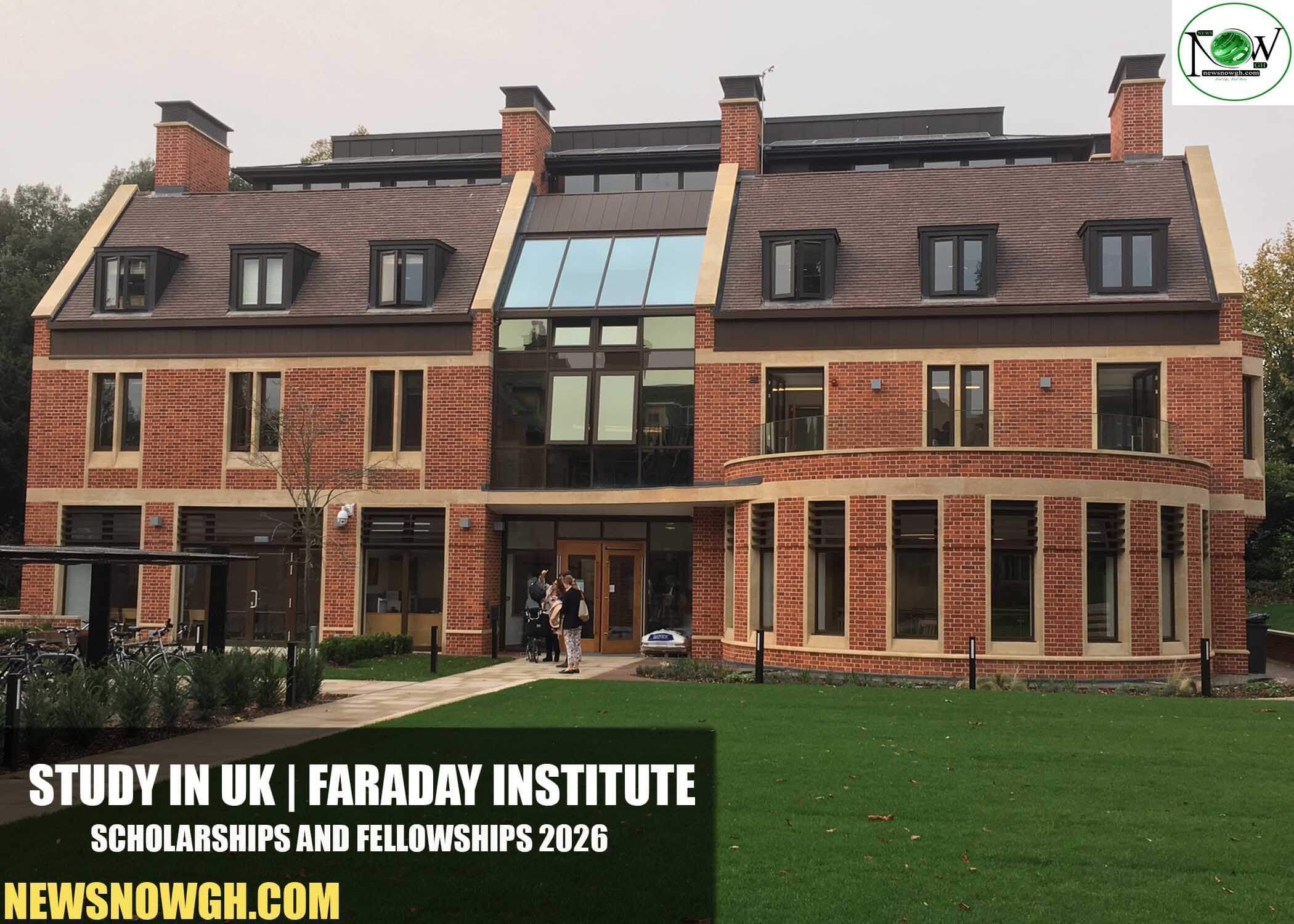
Study in UK | Faraday Institute Scholarships and Fellowships 2026
The global battery revolution is not coming. It is already here. The United Kingdom is placing a massive bet on the researchers who will drive it forward, and through the Faraday Institution, a fresh wave of fully funded PhD and Master’s opportunities has opened for the Class of 2026. These positions span some of the country’s most prestigious universities, including Imperial College London, the University of Oxford, the University of Cambridge, and the University of Warwick.
This initiative represents one of the largest coordinated pushes in battery research talent the UK has made in recent memory. The research itself is anything but incremental. Projects range from data-driven catalyst discovery and next-generation lithium-ion safety to green hydrogen production from biowaste and the business case for battery traceability . If you have been waiting for a sign that clean energy research funding is serious, structured, and accessible, this is it.
Beyond the lab work, the Faraday Institution runs an enrichment scheme specifically built to sharpen the skills, networks, and career trajectories of its PhD cohort . This is not a scholarship that hands you funding and disappears. It is a pipeline designed to turn early-career researchers into industry-ready scientists.
What the Money Actually Covers
The financial structure of these studentships is designed to remove barriers, not create them. While exact packages vary by university and project, Faraday Institution-affiliated PhD funding in the UK typically includes the following:
- Full Tuition Coverage: The scholarship pays your tuition fees for the duration of the programme. Some positions cover both home and international fee rates, but you must verify this for each specific award.
- Generous Living Stipend: You receive an annual tax-free stipend aligned with UKRI rates to cover your living expenses. For 2026, this is approximately £21,805 (or more with a London weighting).
- Research and Training Budgets: You gain access to dedicated funds for equipment, materials, conference travel, and fieldwork tied directly to your project.
- Enrichment Programme Access: You can participate in the Faraday Institution’s enrichment programme, which provides professional development, cross-institutional networking, and industry exposure at no additional cost .
- Cohort Benefits: Some positions are affiliated with EPSRC Centres for Doctoral Training, which often carry additional training grants and cohort-based funding benefits.
Who Can Actually Apply
These are research positions with specific academic and technical requirements, not open-ended grants. Eligibility depends on the individual project, but the general baseline includes the following:
- Academic Background: You need a strong undergraduate or Master’s degree in a relevant discipline such as chemistry, physics, materials science, chemical engineering, or electrical engineering.
- Relevant Experience: You should have a demonstrable interest or prior experience in battery technology, electrochemistry, energy storage, or adjacent research areas.
- English Proficiency: You must meet the host university’s language requirements, typically an IELTS score of 6.5 to 7.0 or equivalent for international applicants.
- International Applicants: You are encouraged to apply. However, you must confirm whether the specific studentship you target covers international tuition fees or only the home rate.
How to Apply
The application process is more straightforward than it looks. Start by visiting the Faraday Institution’s website, where all current PhD opportunities are listed in a searchable table format organized by project title, university, supervisor, and closing date. Identify the projects that match your research background and career goals.
Once you have your shortlist, go directly to the host university’s application portal. Each project is administered through its own institution, not through a single centralized form. Prepare your academic transcripts, a tailored research statement that speaks directly to the project description, your CV, and the contact details of at least two academic referees.
For many of these positions, reaching out to the named supervisor before submitting a formal application is not just acceptable—it is often strongly encouraged. Some listings link directly to the full project description and application instructions, so follow those links rather than guessing at the process.
Application Deadline
There is no single universal deadline for these opportunities, and that is both a challenge and an advantage. Several positions have closing dates falling within December 2026, meaning you need to act within days, not weeks . Other projects remain open for September 2026 entry or accept applications on a rolling basis throughout the year .
The safest approach is to treat every listing as time-sensitive. Funded PhD positions at top UK universities fill quickly once a strong candidate emerges, regardless of what the posted deadline says. Check each project’s specific closing date, and if you are serious, submit early rather than waiting for the final day. Visit the Faraday Institution website today, explore the available projects, and take the first step toward powering the future.
RECOMMENDED
- Study in USA | University of South Carolina Scholarships 2026
- Study in Qatar | Hamad Bin Khalifa University 2026 Scholarships
- Study in Turkey | Türkiye Başarı Burs Programı 2026
- Study in China | USTC International Winter Camp 2026
- Study in UK | University of Cambridge Herchel Smith Postdoctoral Fellowships 2026
- Study in UK | Oxford University MSc African Studies Scholarships 2026-27
- Study in China | Chinese Government Scholarship Fully Funded 2026 at Nanjing University