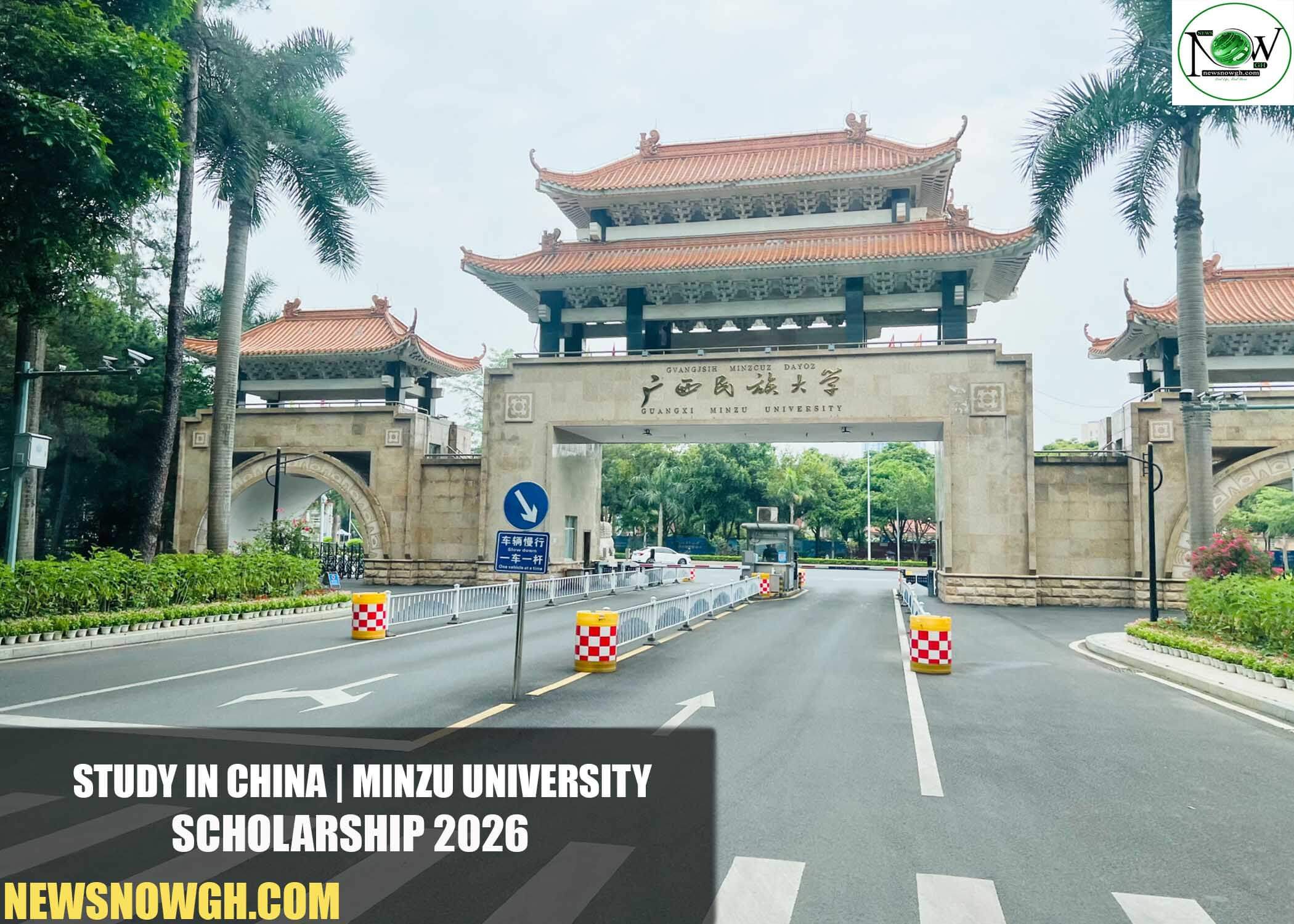
Study in China | Minzu University Scholarship 2026
Minzu University of China has formally opened its 2026 undergraduate application cycle for international students. Self-funded applicants face a final deadline of May 31, 2026, while scholarship-track candidates must meet earlier cutoffs. This announcement signals another year of active international recruitment by one of Beijing’s most distinctive universities—a campus that draws students from all 56 of China’s officially recognized ethnic groups and more than 50 countries worldwide.
Why MUC Stands Out
Minzu University of China occupies a singular position in the country’s higher education hierarchy. The government has included it in the national “Project 211,” “Project 985,” and “Double First-Class” construction initiatives. These designations place MUC among roughly one hundred of China’s most strategically funded institutions. The university has built its reputation on the academic study of China’s ethnic diversity, anchoring its strengths in humanities, social sciences, and ethnic studies.
For students interested in fields like ethnology, anthropology, religious studies, or Chinese minority arts, this intake represents one of the few structured pathways into a Chinese national-priority university with multiple scholarship channels still intact. MUC holds a genuine comparative advantage in these disciplines.
The Financial Picture: Tuition and Costs
The cost structure at MUC remains considerably more accessible than peer institutions in Western higher education systems. Here is what you can expect:
- Non-Art Programmes: Annual tuition stands at CNY 20,000, approximately USD 2,750.
- Art Majors: Annual tuition runs CNY 28,000, roughly USD 3,850.
- Accommodation: On-campus housing costs between CNY 16,000 and CNY 21,000 per year, depending on room type.
- Additional Fees: Medical insurance costs CNY 800 annually, visa processing adds CNY 400, and teaching materials range from CNY 120 to CNY 300 per semester.
A self-funded student in a non-art programme might spend between CNY 37,000 and CNY 42,000 per year before personal living expenses. That places MUC well below the cost of comparable programmes in Japan, South Korea, Singapore, the United Kingdom, or the United States.
Scholarship Pathways
Three scholarship channels exist for qualified applicants:
- Chinese Government Scholarship–Bilateral Program: This Type A award operates through each applicant’s national dispatching authority. It can cover tuition, accommodation, living expenses, and insurance in full.
- International Chinese Language Teachers Scholarship: The Center for Language Education and Cooperation administers this award. It limits applicants to those enrolled in the International Chinese Language Education programme.
- Beijing Government Scholarship: Details appear on MUC’s international education portal.
No single scholarship at MUC replicates the comprehensive coverage of awards at the doctoral level. However, the combined cost of self-funded attendance remains low enough that partial funding can make the programme financially viable for a wide range of applicants.
Eligibility: Who Can Apply
The scholarship welcomes non-Chinese citizens who meet the following criteria:
- Health: You must be in good physical and mental health.
- Education: You must hold a high school diploma or its equivalent.
- Age: You must be at least 18 years old at the time of enrolment.
- Language Proficiency: You must present an HSK 5 certificate with a score above 180. This upper-intermediate fluency requirement sets MUC apart from many other Chinese universities recruiting internationally. Candidates applying specifically to the International Chinese Language Education programme may qualify with HSK 4 at the same 180-point minimum.
- Scholarship Applicants: Those seeking Chinese Government Scholarship funding must submit a China Scholastic Competency Assessment transcript.
How to Apply
Submit your application through MUC’s online international student portal. The non-refundable application fee is CNY 600.
Required Documents
Gather your documents well before the deadline:
- Passport valid past March 1, 2027
- High school diploma or proof of current enrolment
- Complete official transcripts
- Personal statement of at least 800 words written in Chinese
- Two letters of recommendation from high school teachers
- Notarized translations for documents not in Chinese or English
- Foreigner Physical Examination Form
- Non-Criminal Record Report issued within six months
- Portfolio for art and design applicants
The personal statement is a significant differentiator. It should address your academic background, motivation for choosing MUC, a coherent study plan, and career objectives. Given the HSK 5 requirement, the admissions committee will read the statement not only for content but as an implicit demonstration of language competence.
Selection Timeline
For self-funded applicants, eligibility review runs from March through May 2026. Academic interviews occur by the end of June, and admission results release by the end of July. The Chinese Government Scholarship–Bilateral Program follows a slightly earlier track, with interviews as early as March. The International Chinese Language Teachers Scholarship deadline is May 15, 2026, with results expected by the end of July.
Given the staged nature of review, early submission is advisable. Committees begin assessments as materials arrive. Late applications may face tighter scrutiny under compressed timelines.
What a Degree from MUC Means
Graduates leave with a credential from a “Double First-Class” university. They gain a network spanning dozens of countries. For those in humanities and social sciences, they receive scholarly grounding in Chinese ethnic studies that is virtually impossible to replicate elsewhere. Visit the MUC international admissions portal today. Review the full requirements, prepare your documents, and take the first step toward one of Beijing’s most purposeful institutions. Your deadline is May 31, 2026. Do not let it pass.
RECOMMENDED
- Study in USA | University of South Carolina Scholarships 2026
- Study in Qatar | Hamad Bin Khalifa University 2026 Scholarships
- Study in Turkey | Türkiye Başarı Burs Programı 2026
- Study in China | USTC International Winter Camp 2026
- Study in UK | University of Cambridge Herchel Smith Postdoctoral Fellowships 2026
- Study in UK | Oxford University MSc African Studies Scholarships 2026-27
- Study in China | Chinese Government Scholarship Fully Funded 2026 at Nanjing University