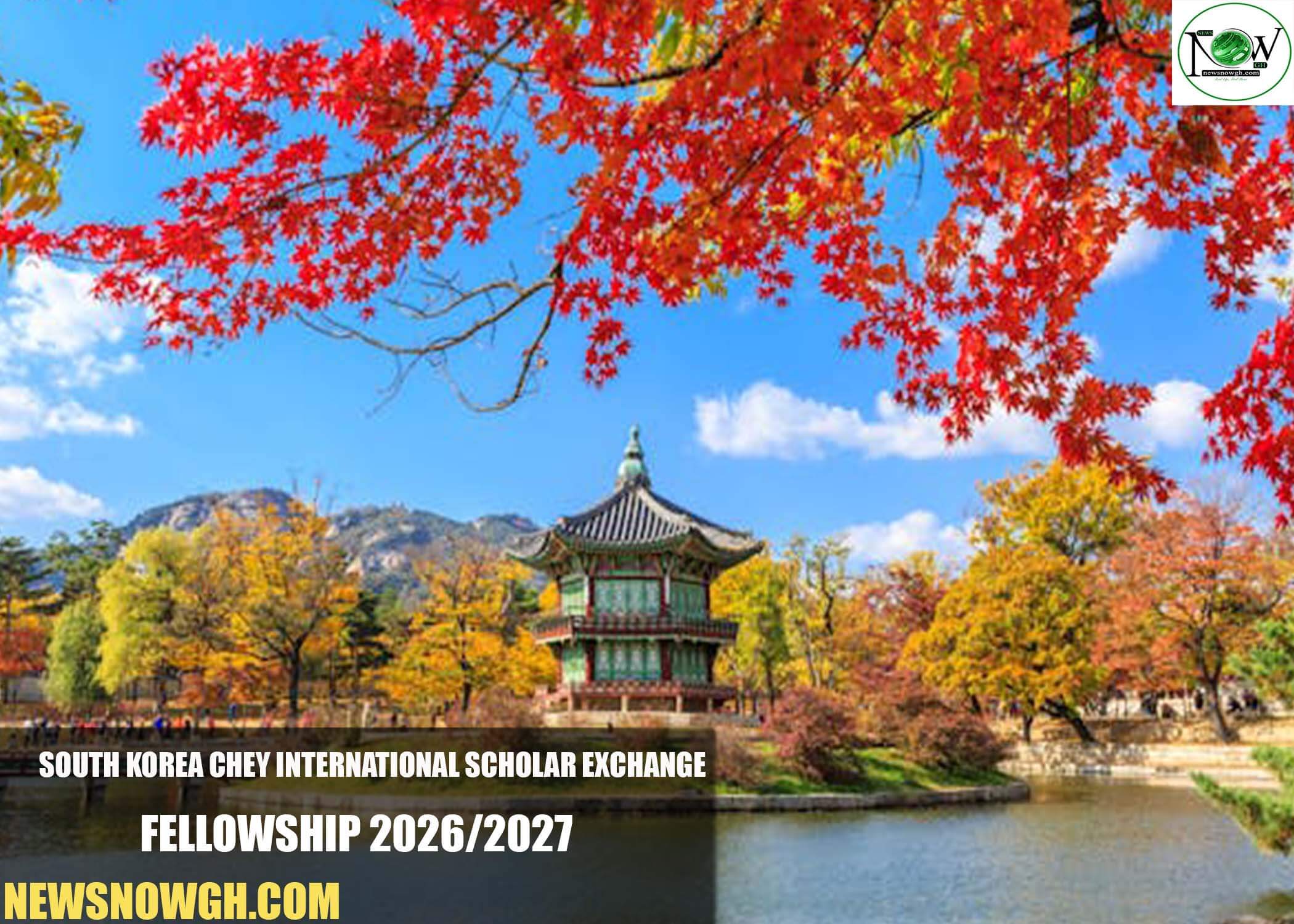
South Korea CHEY International Scholar Exchange Fellowship 2026/2027
For established researchers and postdoctoral fellows seeking a transformative international experience, a premier opportunity in South Korea is now open. The CHEY Institute for Advanced Studies is accepting applications for its prestigious International Scholar Exchange Fellowship for the 2026-2027 academic cycle. This competitive programme offers a fully funded pathway for scholars to conduct collaborative, high-impact research within Korea’s dynamic academic ecosystem while experiencing the country’s rich culture.
A Comprehensive and Fully Supported Research Experience
This fellowship provides a robust financial and logistical package, allowing scholars to focus entirely on their academic work. The comprehensive support includes:
- Complete Travel and Relocation: Round-trip international airfare and an establishment grant for initial settling-in costs.
- Monthly Research Stipend: A regular stipend to cover all living and research-related expenses during the stay.
- Academic and Cultural Integration: Dedicated funding for publishing research articles, health insurance, Korean language courses, and cultural tours.
- Flexible Duration: A choice between a full-year (Sep 2026 – Aug 2027) or a six-month research stay (Sep-Feb or Mar-Aug).
Who Is This Fellowship For?
The CHEY ISEF programme is designed for accomplished academics with a clear collaborative research vision. You are an ideal candidate if you:
- Hold a doctoral degree (PhD) and are a faculty member or researcher at a university or research institution outside of South Korea
- Are 50 years of age or younger at the time of the application deadline (20 February 2026).
- Conduct research in the humanities, social sciences, medicine, pharmacy, technology, or natural sciences.
- Can propose a strong research plan that demonstrates clear potential for collaboration with South Korean academic partners.
How to Apply
The Application Timeline and Key Deadlines
Prospective applicants must adhere to a clear schedule:
- Application Deadline: Submit your complete application by 20 February 2026.
- Results Announcement: Fellowship outcomes will be communicated on 3 April 2026.
- Fellowship Start: Successful candidates will begin their research stay in South Korea on either 1 September 2026 or 1 March 2027, depending on the chosen duration.
How to Build a Winning Application
A successful application hinges on a compelling and well-structured research proposal. Start by identifying potential collaborator universities or research institutes in South Korea whose expertise aligns with your project. Your proposal should clearly articulate the academic significance of your work and the mutual benefits of the international collaboration. Furthermore, highlight how your research contributes to your field and how immersion in Korea’s specific academic environment is essential to its success.
Why This Fellowship Stands Out
Beyond generous funding, the CHEY ISEF programme offers a holistic experience rarely found in standard research grants. The inclusion of language training and cultural activities demonstrates a commitment to true integration, allowing fellows to build lasting professional networks and a deep understanding of Korea’s innovation landscape. This combination of academic rigor and cultural immersion makes the fellowship a uniquely valuable career development opportunity.
The CHEY International Scholar Exchange Fellowship represents a golden chance to advance your research profile on a global stage. By submitting a thoughtful application that showcases a collaborative spirit and a high-impact project, you can secure your place in this prestigious programme. For full application guidelines and forms, visit the official fellowship announcement page via Uppsala University’s research portal.
RECOMMENDED
- Study in USA | University of South Carolina Scholarships 2026
- Study in Qatar | Hamad Bin Khalifa University 2026 Scholarships
- Study in Turkey | Türkiye Başarı Burs Programı 2026
- Study in China | USTC International Winter Camp 2026
- Study in UK | University of Cambridge Herchel Smith Postdoctoral Fellowships 2026
- Study in UK | Oxford University MSc African Studies Scholarships 2026-27
- Study in China | Chinese Government Scholarship Fully Funded 2026 at Nanjing University