
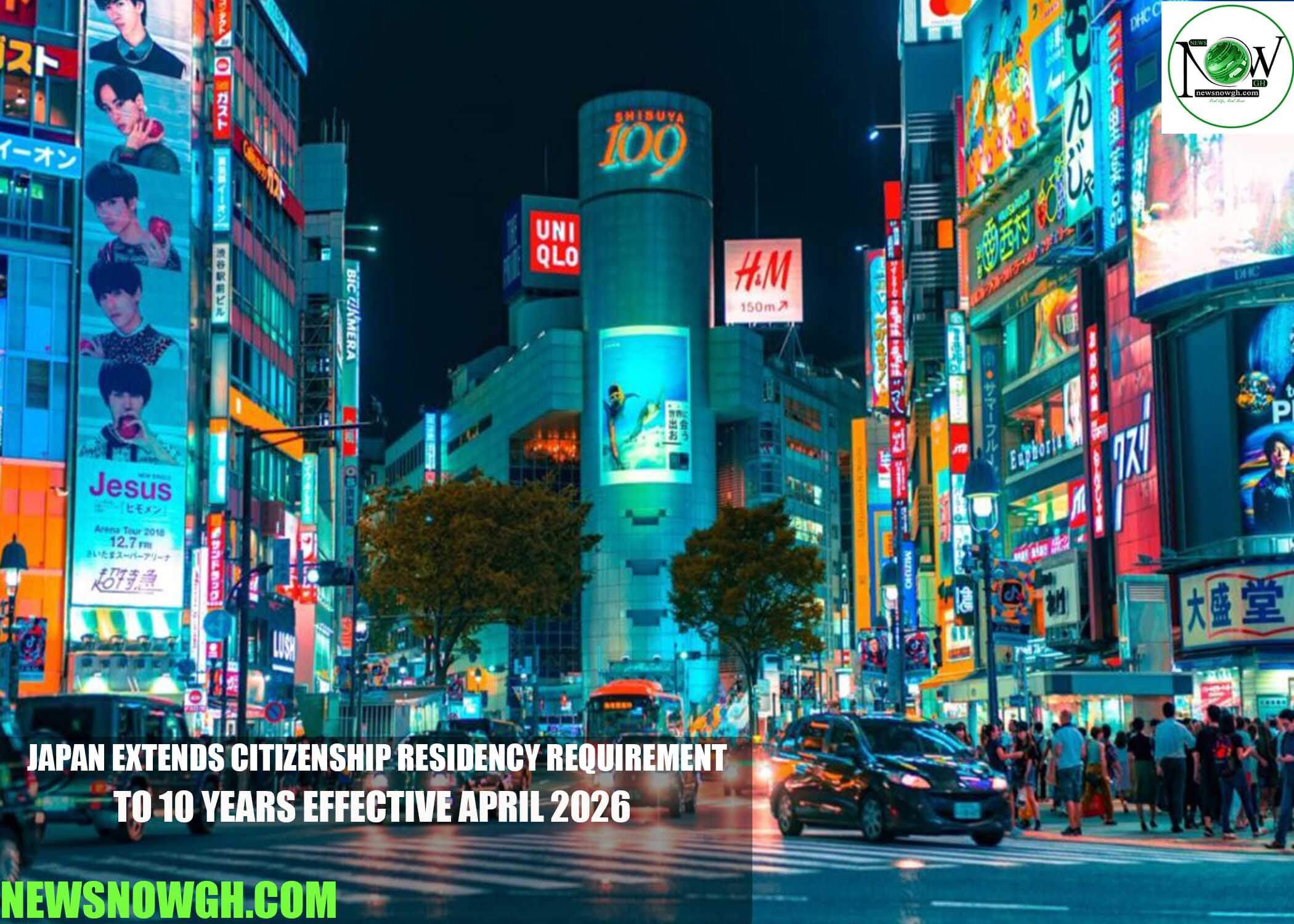
Japan Extends Citizenship Residency Requirement to 10 Years Effective April 2026
Becoming a citizen abroad often requires long-term commitment and consistent contribution to society. Japan is now tightening its naturalization process with stricter expectations for applicants. These updates reflect a shift toward deeper integration and longer residency before citizenship is granted. Therefore, foreign nationals must prepare for more demanding requirements when planning long-term settlement.
Japan Extends Citizenship Residency Requirement to 10 Years
From April 1, 2026, Japan has introduced stricter screening for citizenship applications. Authorities now expect most applicants to complete around ten years of continuous residence. Previously, many foreign nationals could apply after five years of living in the country. However, updated guidelines now raise the practical threshold significantly.
This change aims to align citizenship requirements more closely with permanent residency standards.
Residency Requirement Effectively Doubles
Although the legal requirement remains five years under nationality law, expectations have changed. Authorities will generally assess applicants based on their length of residency. Lawmakers argued that citizenship should not be easier to obtain than permanent residency. Citizenship also confers additional rights, including the right to participate in national elections.
As a result, applicants must demonstrate a stronger long-term commitment before approval.
More Financial and Social Contribution Records Required
Japan is also increasing documentation requirements for financial and social contributions. Applicants must now provide more detailed records than before. At least five years of tax payment certificates must be submitted during the application process. Additionally, two years of social insurance contribution records are required.
Authorities may also review extended financial histories to assess consistency and reliability.
Applications Submitted Before April Remain Valid
Applicants who submitted their requests before April 1, 2026, will still be assessed under previous rules. These cases will follow earlier guidelines based on shorter residency expectations. However, final approval decisions remain at the Justice Minister’s discretion. Therefore, outcomes may still vary depending on individual circumstances.
Key Changes to Citizenship Requirements
The updated system introduces several important adjustments for naturalization applicants in Japan. Residency expectations now extend to approximately ten years for most candidates. Applicants must provide five years of tax records and two years of social insurance proof. These rules aim to ensure stronger alignment with permanent residency standards.
Applications submitted before the deadline will continue under the previous framework.
Naturalization Trends in Japan
Despite strict requirements, Japan continues attracting long-term foreign residents. In 2025, more than nine thousand individuals successfully obtained citizenship. Many applicants come from countries such as China and South Korea. Additionally, a large number of foreign nationals already hold permanent residency status.
These figures highlight steady interest in long-term settlement despite stricter policies.
What This Means for Foreign Residents
For those planning to settle in Japan, expectations are now higher than before. Applicants must maintain consistent residency and demonstrate financial responsibility over several years. Regular tax payments and social insurance contributions will play a critical role in approval decisions. Therefore, long-term planning and compliance are essential for success.
Final Thoughts
Japan is raising the bar for citizenship to reflect deeper integration and commitment. While the path remains open, it now requires more time and stronger evidence of contribution. For applicants, careful preparation and long-term stability will be key to achieving naturalization.
READ MORE
- India Introduces Mandatory e-Arrival Card for Travelers Starting April 2026
- Malaysia Introduces Central System for Foreign Worker Work Pass Applications
- Saudi Arabia Extends Expired Visit Visas and Exit Permits Deadline to April 18, 2026
- Croatia Work Visa Changes: 3-Year Duration, Job Mobility, and Language Requirement
- 9 Countries Introduce Visa Extension Measures Following Middle East Airspace Closures
- U.S. Expands Social Media Screening Requirements for Visa Applicants Starting March 30, 2026